
“There has been an awakening. Have you felt it?”
Somewhere, in a galaxy far, far away, the lore is expanding. This year’s Star Wars Celebration event unearthed surprising news in the form of three new Star Wars films.
The first, directed by James Mangold (Logan), explores the ancient world of the Jedi set 25,000 years before anything we’ve seen in the Star Wars universe to date. The second, directed by Dave Filoni (The Mandalorian), highlights the “escalating war between the Imperial remnant and the New Republic,” potentially occurring between 1983’s Return of the Jedi and The Force Awakens. And lastly, the most stunning news was the revelation of director Sharmeen Obaid-Chinoy’s (Ms. Marvel) untitled Star Wars project that will take place 15 years after the events of The Rise of Skywalker led by Daisy Ridley reprising the role of Rey.
With a potential 2025 release date, Obaid-Chinoy’s film will mark the first direct return to the Skywalker saga in six years. So, in light of this announcement, it’s a good time to look back at the marketing behind the film that started Disney and Lucasfilm’s record-breaking partnership, Star Wars: The Force Awakens.


The year was 2012. Disney had just come off of one of the biggest box-office disasters in the history of cinema, John Carter, which lost them nearly $200 million. They had also helped Marvel deliver one of the year’s biggest hits in The Avengers. Yet they would make a move that would change the future of their business for years to come. Later that year, they acquired Lucasfilm for $4 billion. This would allow them to make Star Wars films which would be profitable science fiction/fantasy fare (unlike John Carter) and something that didn’t have Marvel or Pixar attached. The past six Star Wars films were iconic but also box office juggernauts. However, George Lucas had essentially stopped making Star Wars films. Star Wars represented a new enterprise for Disney that could provide for kids of all ages and families of multiple generations. The key to this would be Star Wars Episode VII (later known as The Force Awakens). The next film in the saga would release on December 18, 2015, and usher in the beginning of a new era. The era of Star Wars world domination.
How does one make a great Star Wars film? This question has been pondered since The Empire Strikes Back was released in 1980. Film is subjective, so everyone has their favorite Star Wars film and their reason for why it’s great. It might be the story, characters, or effects. But, how does one get excited for a Star Wars film? The executives at Disney/Lucasfilm knew then that they would have to bring Star Wars back into the pop culture zeitgeist. We’re not talking about the kid at the local pharmacy who knows a Yoda quote. We’re talking about Star Wars merchandising. Disney knew that the world would have to become saturated in Star Wars with toys, clothes, books, animated series, soaps, band-aids, soda, cereal, and even soup. This led to the huge merchandising event known as “Force Friday” where all of the new toys, books, and apparel would drop for The Force Awakens on September 4, 2015. Much like the film, the idea of “Force Friday” felt like a repeat of the past (Midnight Madness events used to precede past Star Wars films when merchandise dropped). The difference was that no one knew who any of the characters were that they were buying.

The secrecy behind Star Wars: The Force Awakens was one of the factors that made it so much fun to get excited for. Trailers revealed very few plot and character details. Critics/journalists weren’t allowed to watch more than 20 minutes of the film before its premiere. Some fans even speculated that Adam Driver’s Kylo Ren was actually Luke Skywalker in disguise. J.J. Abrams, the director of the film, had built up a reputation for holding back the secrets in his projects, but it was actually Disney who wanted to keep the secrets to themselves. Unlike previous Star Wars films’ marketing (like a soundtrack for Star Wars Episode 1: The Phantom Menace revealing the death of an essential character in 1999 before the film was released), The Force Awakens was a complete mystery. Abrams decided to cast unknowns as the leads of the film (Daisy Ridley as Rey and John Boyega as Finn) because he wanted audiences to have the same reaction watching these characters as they did in 1977 when the original Star Wars was led by then-unknown Mark Hamill, Harrison Ford, and Carrie Fisher. The mystery going into the film would help the audiences discover a new world with two lead actors they had never met.
Some might forget about it now, but The Force Awakens wasn’t just one film but the first of many Disney/Star Wars films to come. The following year would see the release of the first Star Wars Story (Rogue One) and then Episode VIII (The Last Jedi) the year after. Solo and Episode IX (The Rise of Skywalker) would follow later. Disney and Lucasfilm had to knock it out of the park with The Force Awakens, or the future would be in jeopardy. But the insurmountable pressure of the Star Wars saga couldn’t be more overwhelming. Many fans who grew up with the franchise in the ‘70s/’80s were unhappy with the prequels released from 1999–2005. So Lucasfilm decided to distance itself from those films and focus more on what people loved about the original trilogy. It was important to bring back the original fans, which meant bringing back the original stars (Hamill, Fisher, and Harrison Ford). The Force Awakens would represent the beginning of what many deem the “legacy sequel” (bringing back actors from past films that would pass the torch to a new generation) today. Practical sets and effects were made a priority, including a remote-controlled droid that would be known as BB-8, costumed aliens, and on-hand lightsabers that lit up. Star Wars veteran Lawrence Kasdan (the writer of Empire Strikes Back and Return of the Jedi) was brought back to co-write the film. And, of course, the maestro himself, John Williams, returned to write and compose the score. All these elements combined to produce the feelings and emotions that audiences had watching the original Star Wars trilogy.
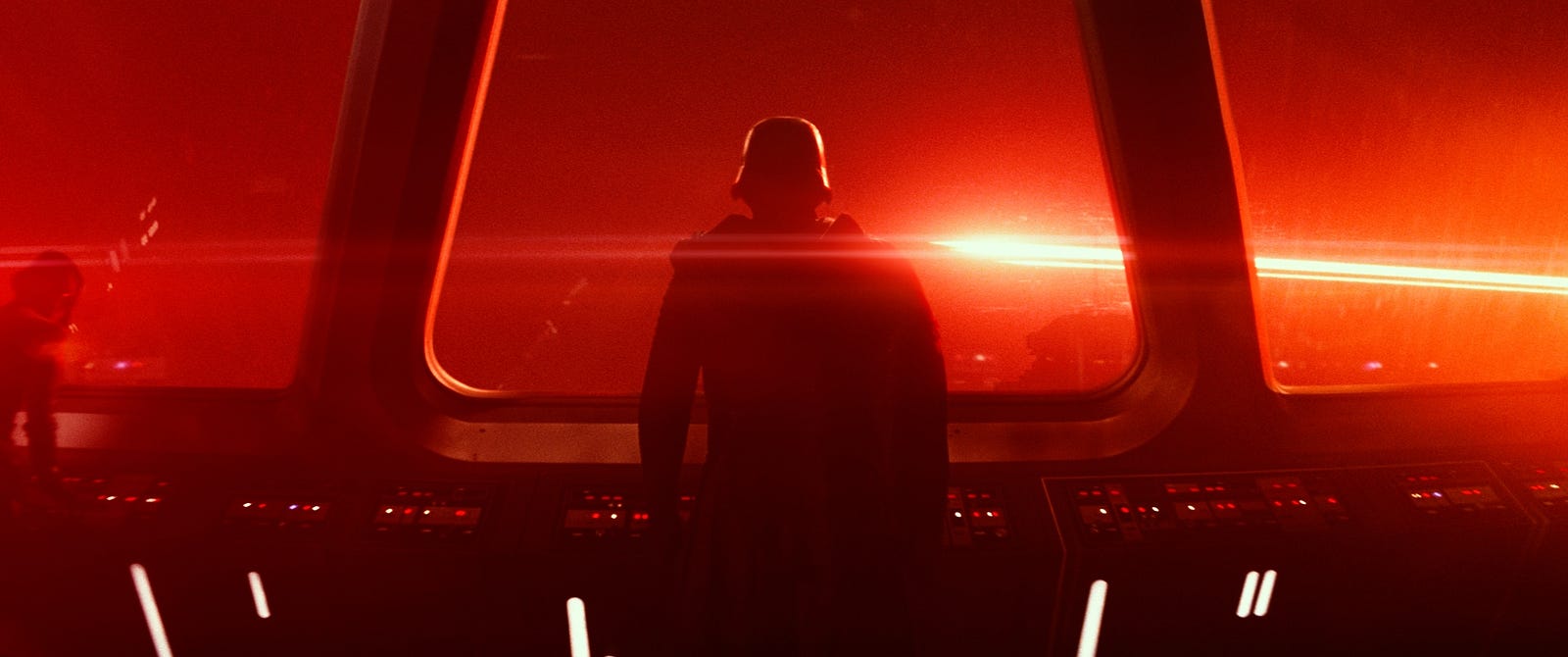
The hype was real. The trailer was released to record-breaking viewing numbers online (112 million views in 24 hours) followed by a record-breaking $100 million in advance ticket sales. Brands like Verizon, Duracell, and Covergirl flooded TV screens and stores with advertisements. 2015 was the year that Star Wars returned in full force, and it was all thanks to a little film known as Star Wars: The Force Awakens. The film became the highest-grossing domestic release of all time (and still is to this day), a massive success for fans of all ages. Not only did the film please the original fans, but it introduced Star Wars to a whole new generation. Characters like Rey, Finn, and Poe became the faces of the franchise to many children. All films that followed The Force Awakens (except for Solo) grossed $1 billion at the box office and kept Star Wars at the front of the conversation. Disney’s streaming service, Disney+, became the home of the hit sensation The Mandalorian, among several other Star Wars series. However, it wasn’t all sunshine and rainbows for the future of Star Wars.
The past few years have not been as bright, with toxic fans plaguing the Star Wars community and a lack of theatrical films (Patty Jenkins’ Rogue Squadron was initially set to release this year but has seemingly been canceled). There have been endless announcements of directors/writers being hired onto projects and then leaving. Yet, Star Wars is still in the conversation. This wouldn’t have been possible without The Force Awakens. It brought Star Wars back and made people excited for it once again. Hopefully, this next set of films will bring a brighter future for one of the most popular film franchises ever. Star Wars will always be here, surrounding us. It is very much like The Force in that way. Like Maz Kanata says in The Force Awakens, we just have to “let it in.”


No Comment! Be the first one.